Tuesday, April 12, 2011
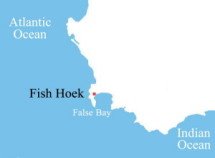
Seefontein Dxpedition - 28th to 31st March 2011
Friday, February 25, 2011
Charles "Copper" Slingsby - Cape Town's Pioneer Dxer during the 1920's and 1930's
What began as a recent chance discovery of an interesting letter from David Slingsby on the KDKA website has resulted in an astonishing futher discovery - an unprecedented treasure trove of priceless QSL's and original letters, addressed to his grandfather Charles, from pioneering and experimental short wave radio stations which broadcast during the 1920's!
The likelihood of individual QSL cards and especially QSL letters to survive over 80 years is rare, so to discover that an entire collection from this era has remained intact (barely a few minutes from my QTH) is quite remarkable to say the least!
After a phone call to David, I was invited to view the astonishing well preserved collection of early QSL's, letters, log books and original newspaper cuttings, meticulously compiled by grandfather Charles.
Charles Slingsby, or "Copper" as he was nicknamed (he was born with a shock of red/auburn hair), was one of the first pioneering short wave radio enthusiasts to operate in Cape Town, South Africa. During the 1920's Copper dxed with a home constructed three valve receiver from his radio shack, situated in Belmont Road, Mowbray and later, Thelma Road, Claremont (suburbs of Cape Town).
It is interesting to note that the Post Master of Cape Town, Mr. Girling, lived next door. Girling understood morse code and was able to pick up news from passing ships. Perhaps this futher helped to ignite Copper's interest in long distant radio reception.
Broadcasts were meticulously recorded in various log books. Fortunately, thanks to grandson David who has a great interest in family history, three of these logbooks have been preserved alongside the QSL's and letters and serve as a fascinating record of the long distance radio reception experienced in Cape Town during the 1920's.
Copper's dxing skills and follow-up reporting resulted in the various interesting QSL's and letters from pioneering and experimental short wave radio stations in the U.S.A. , U.K. and Australia. These stations appreciated the important feedback regarding distant reception. It must have been a pioneer dxer's dream to receive the enthusiastic replies from KDKA Pittsburgh, WGY Schenectady, 2NM Caterham, 5SW Chelmsford and 3LO Melborne to name a few!
Local newspaper reporters from the Cape Times and Cape Argus would often sit alongside Copper and write up world events from the broadcasts received on his radio. For example, the famous Jack Dempsey / Sharkey fight broadcast via KDKA from the Yankee Stadium, New York on the 22nd July 1927 was received at Copper's radio shack and reported by the Argus sports writer.
Copper Slingsby also wrote various articles which were published in the two local newspapers. He advised on the purchase or construction of a shortwave receiver, how to tune in and what one could expect to hear. "Wireless", especially shortwave, was in its infancy and the articles would have done much to promote an interest in tuning in.
Charles Slingsbly was born on the 17th May 1887. He joined the British forces in 1901 at the age of 14 as a bugler during the Anglo Boer War. He met and married Violet Alice Dove in a whirlwind romance lasting a week during WW I. They had four children, three of whom are still alive today. It is interesting to note that the family arrived back from Kenya and spent a brief time at Fish Hoek before moving to Mowbray.
My thanks and appreciation to David Slingsby for his kind hospitality (the coffee was most enjoyable by the way!), for preserving an important part of pioneering radio history and for his enthusiasm and willingness to share the fascinating collection and information.
I hope to share some more early QSLs, letters, and articles from the Copper Slingsby collection in future posts.
Saturday, February 5, 2011
Cape DX on Amateur Radio Today
CAPE DX Edition 1 - The Cape Peninsula

CAPE DX Edition 2 - Cyclone Yasi
Broadcast Schedule
You can listen to Amateur Radio Today every Sunday at 08:00 UTC on the following frequencies:
17 570 kHz AM / 7205 kHz AM / 7082 kHz SSB.
Repeat broadcasts are availlable every Monday at 19:05 UTC on 3215 kHz AM.
Podcasts
The weekly radio programme is also available via a Podcast at :
http://www.zs6ro.co.za/podcast
Tuesday, February 1, 2011
WFAN New York NY 660 kHz QSL and Audio

WFAN New York NY on 660 kHz was heard with decent peaks during the recent visit to Noordhoek. The station made it through on the 13th January 2011 at 0320 UTC via the Sony SRF-M37V and 220 metre BOG.
Programme Director Eric Spitz kindly verified my email report within an impressive 15 minutes!
Google Earth image of the WFAN 167 metre antenna mast situated on High Island.HIGH ISLAND
High Island is a small private island which is connected to City Island via a small bridge and a sandbar that emerges at very low tide.
Google Earth image of High island showing the sandbar and bridge.In the early 20th Century the island was privately owned with a community of summer rental cottages for approximately 40 families. In 1961, the island was purchased for the use of radio transmission towers.
The island consists of the transmitters and antenna towers for 660 WFAN and 880 WCBS, both of which are owned by CBS.
On August 27, 1967, a small private airplane crashed into the radio tower, destroying the antenna and taking WNBC and WCBS off the air. Both stations were able to borrow nearby transmission facilities for about a week, until an emergency tower could be erected on the island. The permanent replacement was built with a second (shorter) tower as an emergency backup.
Another view of High island, showing the WFAN antenna mast in the foreground with the auxilary tower behind (Photograph Wikimedia Commons).The taller of the towers is 549 feet (167 meters). The shorter tower is 300 feet (91.4 meters) and was built in 2001 to replace the emergency tower erected in 1967. The proximity of these two AM radio stations has, at times, caused interference on telephones and electronic equipment on nearby City Island.
High Island is an AM radio transmission facility with no studios or tower tenants (WFAN and WCBS broadcast from studios located in Manhattan).
A full-time caretaker's residence was in use from 1961 to 2007. The island is currently uninhabited and maintained by the radio stations' engineers and contractors.
AUDIO CLIP
A recording of a post local sunrise peak of 660 WFAN at 0420 UTC on the 11th January 2011 via the Sony SRF-M37V and 220 metre BOG at Noordhoek is available here. The station made it through over a distance of 12 536 km.
Thursday, January 20, 2011
Noordhoek DXpedition Ultralight Loggings : 11th - 15th January 2011
Noordhoek's ideal position on the Cape Peninsula provides a great opportunity for dxing mediumwave radio stations from across the Atlantic.
After the early evening reception from Africa and the Middle East, many stations from Brazil usually make it through to this location from late evening until our local sunrise with astonishing and consistent near "local" quality peaks.
Reception from the more distant North American continent can also be quite productive during our mid summer season, as was the case during another interesting annual dxpedition to Noordhoek from the 11th - 15th January 2011.
ECUADOR
The highlight of the dxpedition was the reception of HD210A, Guayaquil, Ecuador on 1510 khz with 500 watts. The time signal station was heard over a distance of 10 626 km / 6 602 miles - a new ULR country and the most distant 500 watt station that I've been fortunate to receive via the Sony SRF M37V.
The station was last received more than 25 years ago on June 3rd, 1985 via the FRG7 receiver and a 30 metre random antenna at Sandbaai.
My thanks and appreciation to Bruce Portzer for kindly providing the information and URL links and to Chuck Hutton for listening to the audio clip and providing some sound advice!
BRAZIL
Another highlight included the reception of Super Radio Tupi, Cachoeiro de Itapemirim on 1590 kHz with 250 watts - a personal first.
TRINIDAD
It was also a pleasant surprise to hear Inspirational Radio 730 AM, Port of Spain, Trinidad on 730 khz for the first time - a personal first and another new ULR country.
U.S.A.
The reception of KOA Denver CO on 850 khz over 14 981 km / 9 308 miles represents a new ULR logging and the most distant 50 kw station that I've been fortunate to identify via the Sony SRF-M37V.
KSL Salt Lake City UT on 1160 kHz would have been eligible as the most distant station heard with the Sony Ultralight but could not be identified during a brief tentative appearance.
The Loggings : Freq (kHz) and Time (UTC)
531 2130 ALGERIA Alger Chaîne 1 Ain-El-Beida in AA 1 sec delay // 549 kHz 14/01
549 2130 ALGERIA Alger Chaîne 1 Les Trembles in AA 14/01
621 0400 CANARY ISLANDS RNE Tenerife in SS w tail end of 60's music programme, time "pips" and station identification - a common guest here with a huge "local quality" signal 15/01 audio clip
660 0320 U.S.A. WFAN New York NY w Nets vs Phoenix Suns basketball commentary by Chris Carino , id " Sports Radio 66 WFAN " and ads 13/01
670 0350 U.S.A. WSCR Chicago IL w Minissota Vikings game highlights, a reference to sister station WBBM News Radio 7-80 and talkback 11/01
680 0259 U.S.A. WRKO Boston MA w promo by Pat Whitley : " ... Hi. This is Pat Whitley. You can join me for the 'Pat Whitley Restaurant Programme', Sunday at 10:00 am until 1:00 pm that makes you the restaurant critic. Sunday at 10:00 o'clock on WRKO ... " followed by WRKO news at 0400 UTC 11/01
680 0405 U.S.A. WCBM Baltimore MD w id "Talk Radio 6-80 WCBM" 13/01 * new ULR log
700 0336 U.S.A. WLW Cincinatti OH w ad : " ... Call now. You'll get free installation the very next day - three ways to save and free next-day installation from Time Warner Cable ... call 1800 TW Cable today ... " 14/01
710 0402 U.S.A. WOR New York NY w promo by pharmacist/nutritionist Jerry Hickey of InviteHealth : "Call 800 765 73 58 now to join Jerry at this special live broadcast of InviteHealth Saturday Morning Show. Doors open at 8:30 and the show starts at 9:00. Hurry - tickets are going fast. Call 800 765 73 58 now or visit WOR 710.com/newyou for more details ... ". Most consistent station from the U.S.A. with good peaks 11-01 audio clip
720 0320 U.S.A. WGN Chicago IL w id and talkback 11/01
730 0325 TRINIDAD Inspirational Radio 710 AM Port of Spain w ann of upcoming events by female announcer w Caribbean accent - also heard during a subsequent peak with a prayer 13/01 * personal first and a new ULR country audio clip
730 0259 CANADA CKAC Montreal ON w sports commentary in FF 13/01
750 0304 U.S.A. WSB Atlanta GA w id and news report 11/01
750 0255 VENEZUELA RCR Caracas w ann in SS - a regular here - fair peak 13/01 audio clip
The main headquarters of RCR, Caracas, Venuzuela (Photograph Wikimedia Commons).760 0044 U.S.A. WJR Detroit MI w ad and ann incl id : " ... and now back to Mark Levin. ' JR ' News/Talk station ... " followed by The Mark Levin Show 14/01
770 0315 U.S.A. WABC New York NY w telephonic interview by male presenter 13/01
780 0328 U.S.A. WBBM Chicago IL w id and ads 11/01
790 0307 U.S.A. WNIS Norfolk VA w Virginia Tech Hokies vs North Carolina basketball commentary 14/01 audio clip
800 0025 NETHERLANDS ANTILLES TWR Bonaire w "Through The Bible Radio" 11/01
800 0356 CANADA CKLW Windsor ON w talkback 14/01
810 0320 U.S.A. WGY Schentectady NY w talkback 13/01
820 0320 U.S.A. WBAP Fort Woth TX (presumed) w nutritional advice 13/01
820 0345 ST. KITTS Radio Paradise w gospel music - good peak 14/01
830 0305 U.S.A. WCRN Worcester MA with news and ads incl "Diamond Chevrolet" : " ... It takes a tough truck to stand up to New England weather and it's why you see more and more Chevrolet trucks on the road than ever before. At Diamond Chevrolet ... we've got a great selection of 2011 Chevy trucks ... " 13/01
830 0358 U.S.A. UNIDENTIFIED co-channel mix with WCRN 11/01
840 0304 U.S.A. WHAS Louisville KY w Fox News Radio id, WHAS "jingle" and stock market report 13/01
850 0400 U.S.A. WTAR Norfolk VA w id "News, talk, sports, financial news, consumer information, personal advice, traffic, weather. AM 8-50 WTAR, Norfolk" followed by time check for 11:00 pm and CNN Radio news read by Greg Black - very good peak 11/01 audio clip
850 0415 U.S.A. KOA Denver CO w ads including mention of telephone number with Denver area code 303 (303 759 44 ... 4) and "The First Annual Truck, Trailor and Equipment Sale at ... main road in Denver ... " received over a distance of 14 981 km / 9 308 miles * a new ULR log and the most distant 50 kw station received with the Sony SRF M37V 13/01 audio clip
860 0336 CANADA CJBC Toronto w discussion in FF 11/01
880 0339 U.S.A. WCBS New York NY w traffic update, a wx forecast by meteoroligist Bob Smerbeck followed by an airport wx condition forecast by the anchor/presenter and an id with time check as : " WCBS News time : 10:40 ... " - good peak 13/01
890 0345 U.S.A. WLS Chicago IL (presumed) w ads - 13/01
900 0210 CANADA CHML Hamilton ON w id as "Hamilton's News Talk Leader ... CHML" 13/01
930 0310 U.S.A. WBEN Buffalo NY (presumed) w sports discussion 11/01
950 0315 U.S.A. WPEN Philadelphia PA w ESPN promo : " ... BCS National Championships Game on ESPN Radio ... Join Michael McNamara ... breakdown the game at 9:00 am (Eastern) at ESPN radio ... " 13/01
990 0023 U.S.A. WNML Knoxville TN a possibility here w discussion by male presenter 14/01
1000 0335 U.S.A. WMVP Chicago IL w ads : " ... Visit athletico.com or call 1-877 ATLETICO. AthletiCo : physical and cccupational therapy for the Chicago Bulls ... Start your week off right and chill out at Chili's. Visit any Chicago Chili's restuarant and take advantage of these great meal deals ... " 13/01
1010 0340 U.S.A. WINS New York NY w id : " All news all the time. This is 10-10 WINS. You give us 25 minutes, we'll give you the world ". News anchor Susan Richard continued : " ... Good evening. Five degrees. We have clear skies. It is 10:40 on this Monday, January 10th. I'm Susan Richard and here is what's happening ... " 11/01
1010 0230 U.S.A. WJXL Jacksonville Beach FL (presumed) w sports commentary 13/01 * new ULR log
1020 0324 U.S.A. KDKA Pittsburgh w the Jim Bohannon Show 14/01
1040 0325 U.S.A. WHO Des Moines IA w political item by male presenter 14/01
1050 0310 U.S.A. WEVD New York NY with post sports game talkback 14/01
1060 0254 U.S.A. KYW Philadelphia PA w id and time check by female as "KYW News time. 9:54" followed by news reports 14/01
1070 0351 U.S.A. UNIDENTIFIED two stations w sports commentary and discussion 14/01
1080 0406 U.S.A. WTIC Hartford CT w sports results and wx 14/01
1090 0405 U.S.A. WBAL Baltimore MD w wx " ... temperatures will range in the mid thirties on Sunday. I'm John Patti in the WBAL News room and that's the latest Insta-Weather Plus Forecast ... " 14/01
1100 0340 U.S.A. WTAM Cleveland OH w discussion and lineup by male presenter 14/01
1110 0310 U.S.A. WBT Charlotte NC (presumed) w discussion 13/01
1120 2335 U.S.A. KMOX St. Louis MO w ads incl "The Blue Ocean Portfolios of St. Loius" index funds - also id as "News Radio 11-20 KMOX" 11/01
1130 0420 U.S.A. WBBR New York NY w ad for ' Gold Bond Intensive Healing Cream ' and sports commentary from the campus of Stanford HIgh School 15/01
1140 0300 U.S.A. WRVA Richmond VA w id and Virginia Tech Hokies vs North Carolina basketball commentary 14/01
1160 0325 U.S.A. KSL Salt Lake City (presumed) heard briefly with male presenter - very poor 13/01
1180 0306 U.S.A. R. Marti Marathon Key FL w SS ann 14/01
1190 0300 U.S.A. WLIB New York NY w id : "This is 11-90 WLIB and WBLS HGT New York" followed by programme introduction : " ... and now from the sanctuary of Healing From Heaven Temple : Dr Leo Stallworth on your Praise and Inspiration station 11-90 WLIB ... " 13/01
1200 0316 U.S.A. WOAI San Antonio TX w religious programme 14/01
1300 0330 U.S.A. UNIDENTIFIED w ads 14/01
1400 2320 GRENADA The Harbour Light Of The Windwards w religious programme 11/01
1500 0018 U.S.A. WFED Washington DC w ads including " ...1 866 Quicken ... " 14/01
1510 0354 U.S.A. WLAC Nashville TX (presumed) w heath nutrition programme by male presenter 14/01
1510 0345 EQUADOR HD210A Guayaquil Time Signal Station w time "pips" which were absent during the final 10 seconds of each minute to allow for regular time / station identification announcements under the noise floor. A characteristic longer 0.5 second time "pip" occured at the beginning of each minute.
The reception of the 500 watt station over a distance of 10 626 km / 6 602 miles proved to be the highlight of the dxpedition 15/01 * personal first, a new ULR country and the most distant 500 watt station received with the Sony M37V. audio clip
The restored neighbourhood of Las Penas, located in downtown Guyaquil, Ecuador (Photograph Wikimedia Commons).1530 0342 U.S.A. WCKY Cincinatti OH w sports commentary under VOA São Tomé e Príncipe 14/01
1530 2035 SAO TOME E PRINCIPE VOA Pinheira in EE with "African Beat" - a regular guest here with a huge "local quality" signal 14/01 audio clip
1539 2000 UNITED ARAB EMIRITES VOA Radio Aap Ki Dunyaa, Al Dhabbaya w VOA EE news and Urdu id - another regular guest with a good signal via a 50 metre cable slide antenna (see pic below) 14/01 audio clip
1540 0310 BAHAMAS ZNS1 Nassau w upbeat music - good peak 13/01
1560 0355 U.S.A. KGOW Houston TX (presumed) w sports discussion 14/01
1590 2220 BRAZIL Super Radio Tupi Cachoeiro de Itapemirim w id in PP (250 watts) 13/01* a new ULR log and personal first audio clip
1600 2215 U.S.A. WWRL New York NY w anns under Radio Nove de Julho, São Paulo, Brazil 13/01
1610 0342 ANGUILLA Caribbean Beacon w religious sermon - consistent good peaks 14/01
1660 2315 U.S.A. WWRU Elizabeth NJ 11/1
1700 0305 U.S.A. KVNS Brownsville TX w ad for "Ludens Wild Cherry Drops" - fair peak 13/01
BRAZIL
1590 Super Radio Tupi Cachoeiro de Itapemirim (250 watts) 5 970 km / 3 710 miles
CANARY ISLANDS
621 RNE Tenerife
EQUADOR
1510 HD210A Guayaquil (500 watts) 10 626 km / 6 602 miles
SAO TOME E PRINCIPE
1530 VOA Pinheira
TRINIDAD
730 Inspirational Radio 730 AM Port of Spain
UNITED ARAB EMIRATES
1539 VOA Radio Aap Ki Dunyaa Al Dhabbaya
U.S.A.
710 WOR New York NY
790 WNIS Norfolk VA (5 kw) 12 548 km / 7 797 miles
850 WTAR Norfolk VA.
850 KOA Denver CO 14 981 km / 9 308 miles
VENEZUELA
750 RCR 750 AM Caracas 10 220 km / 6 350 miles.
Receiver : Sony SRF-M37V
Antenna : 220 m, 100 m BOGs and 50 m random "cable slide"
Saturday, January 1, 2011
Looking Back - Part 5
Part Five of the account of the early days of radio in South Africa during the 1920's as told by South African Dxer, Nick Kendall.
The candid account, in Nick's own words, provides an insight into what was involved in being able to listen in during the early pioneering days of radio broadcasting.
The Pilot A.C. Super Wasp Receiver
In or about 1927, while glancing through "Cape Town Calling" (a weekly bulletin that provided program details for the Cape Town broadcasting station), I came across an advertisement for the Pilot AC Super Wasp - an all electric shortwave receiver - Yes!
I had never heard of the Pilot Company before so I phoned Carlton Davies (who was familiar with the set). He operated from his house in Sea Point and I was invited to come out and see him. After our initial meeting, I got to know him very well.
The Super Wasp came out in kit form and when assembled became a four valve set. It was similar to the Reinatz circuit but had the advantage of a tuned RF stage and a separate power pack and speaker. Five pairs of plug-in coils were supplied giving a coverage of 500 to 17700 kilocycles (600 to 16 metres). Tuning was very broad but it did not matter as there were only a few stations on the air. If you used one today you would get at least ten stations all in a jumble.
A few months later the Pilot Company (USA) sent out a table model complete with speaker. Valves improved and special ones took the place of the all purpose ones. Screengrids were used in the RF stages and detectors, power valves in the amplifiers which of course improved the performance of the set tremendously.
A great number of American sets arrived on the market but broadcast band only. The all wave with a wave change switch was introduced much later.
The Crosley Corporation tried to market their bandbox all wave set but it was not a success. As a matter of interest they owned WLW at the time.
I cannot recall any other shortwave all electric sets available during that time and so the Super Wasp reigned supreme.
Tuesday, December 28, 2010
Looking Back - Part 4
The candid account, in Nick's own words, provides an insight into what was involved in being able to listen in during the early pioneering days of radio broadcasting.
The commercial sets before 1925 (as far as I can remember) were all battery powered.
It must have been at the end of that year that the "all electric" sets arrived from the U.S.A. They were all cabinet or "console" designs - beautifully and solidly built - seven or eight valves. Thanks to Rice and Kellog the sets were all fitted with Moving Coil speakers which in my opinion are far superior to present day Permanent Magnet speakers (General Electric engineers Chester W. Rice and Edward W. Kellogg designed the moving coil loudspeaker in 1925 - GD).
Well known makes were FADA, Radiola (RCA), Stewart Warner, Majestic, Stromberg Carlson, Capehart and a few isolated custom built sets. Incidently, all the dials were calibrated in kilocycles - not metres. If you were lucky you could pick up Johannesburg and Durban.
Philips brought out the H.T. Eliminator which plugged into the mains. It took the place of the H.T. and grid bias batteries but I still had to contend with the accumulator and keep it charged to work my three volt home-made Reinartz-grebe set.
The Reinartz-grebe set proved to be far more sensitive than any of the commercial sets on the market so I decided to wait before purchasing an "all electric" model. I continued to use the set for broadcast band reception and easily pulled in Johannesburg and Durban.
Sunday, December 26, 2010
Looking Back - Part 3
Part Three of the account of the early days of radio in South Africa during the 1920's as told by South African Dxer, Nick Kendall.
The candid account, in Nick's own words, provides an insight into what was involved in being able to listen in during the early pioneering days of radio broadcasting.
The reception of KDKA in Cape Town during the early 1920's
While reading through The Argus (Cape Town newspaper) one evening, I saw the caption "New Experimental Radio Station from the United States heard in Cape Town" or words to that effect :
" ... Mr. X from Long Street reports hearing the new experimental station KDKA - owned and operated by the Westinghouse Electric Manufacturing Company, Pittsburgh. He said that he sat up night after night trying out different coils to get down to 63 metres and eventually his patience was rewarded. He heard the announcer say "This is KDKA" followed by music. The signal faded between 4:00 am - 5:00 am. Reception of course varied ... "
(From July 1923, apart from the regular broadcast frequency of 326 meters / 920 kHz with an output of 500 watts, KDKA programs were also transmitted via shortwave station 8XS on a frequency of 63 meters / 4 760 kHz with an output of 40 kw. The shortwave station made it through to Cape Town as described in the Argus newspaper report - GD).
A couple of nights later he wrote an article entitled, "How to listen to KDKA" :
" ... The aerial and secondary coil should consist of 3 turns of no.16 bare or enamled copper wire - each turn about 3/16 of an inch apart and kept apart by ebonite spreaders. The reactor coil should be 5 turns... "
This greatly intrigued me and I decided to see what the "Family Four" could do.
After hours of winding and re-winding coils, I managed to get the set to oscillate over just one half of the condenser - I hoped that it would be the right half. At 3:00 am I patiently and slowly tuned the condenser dials. The only sound was the oscillation "hiss". I plugged the hydrometer into the accumulator (LT battery) - it showed only half charge. The next day I lugged it up to the garage to be recharged and borrowed another one.
After sitting down again with the set during the third morning (after two previous fruitless efforts), I was delighted to hear a strong carrier wave. Moving the reactor coil away from the two other coils and after adjusting the condenser a fraction, I heard music.
As I took my hand off the condenser dial, the signal disappeard (capacity effect) so I had to hold my hand on the condenser to hear the signal which meant standing about two feet away from the set in order to tune it.
Then I had an idea - using two bicycle pump clips which opened and closed like cloths pegs when attached to the condenser knob, I was able to slip a 3 ft long bamboo rod into the other end of the clip - as the panel of the set sloped, the rod rested on the edge of the table - it worked very well.
I heard an announcement which I shall never forget :
" ... This is KDKA - The Westinghouse Electric and Manufacturing Company, Pittsburgh - The Pioneer broadcasting station of the world ... "
(During late 1924 KDKA programmes were also received in South Africa via shortwave and rebroadcast via the JB mediumwave station in Johannesburg - GD)
Friday, December 24, 2010
Looking Back - Part 2
Part Two of the account of the early days of radio in South Africa during the 1920's as told by South African Dxer, Nick Kendall.
The candid account, in Nick's own words, provides an insight into what was involved in being able to listen in during the early pioneering days of radio broadcasting.
It was about 1923 when Johannesburg started testing (and a little later Cape Town).
Five Valve Superhet
I decided that I wanted a beter receiver so I bought a home-made five valve superhet from a friend. This comprised of three staged HF (RF), oscillator, detector and two stages of LF (AF). It had thirteen controls : seven rheostats, three variable condensers, volume, potentiometer and tone.
The tuning was so tricky that it took about 10 minutes to tune Cape Town. Just imagine three stages of HF - each tuned by a separate condenser - there was no "ganging" in those days.
After a while I got fed up with the set and wrote to "Modern Wireless" for a suitable circuit. I told them that I wanted a four valve set and enclosed a postal order for 2/6 (25 cents).
The "Family Four"
The set was called the "family Four" and consisted of one HF (tuned anode), a detector and two LF's with switching arrangements so that one, two, three or four valves could be used.
They sent me a blue print (actual size) template, drilling panel, wiring diagrams (both practical and schematic). I had the panel drilled by sombody that I knew - did not take a chance myself. Ebonite had a nasty habit of splitting at the last moment. These days ebonite panels have a glossy surface. It was believed that this glossy surface acted as a conductor so it had to be sandpapered and polished again before using. You have no idea of the trouble we went to in building those old sets. I wired it up okay, switched it on and it worked fine - picked up Johanessburg quite easily.
Amplion Horn Speaker
I had an "Amplion" loudspeaker - the only one with an oak horn which produced a much better tone than other metal horns or trumpets.
Johannesburg, Cape Town and Durban radio stations
Johannesburg opened officially in 1924 (1st July) and a couple of months later, Cape Town (September 1924), followed by Durban (December 1924). We thought it wonderful to be able to switch between Cape Town, Johannesburg or Durban.
AUDIO CLIP
In September 1924, the Cape Peninsula Broadcasting Association officially launched Cape Town's radio service in JNX Building, Greenmarket Square.
Studio manager Rene Caprara (who later became the Director-General of the SABC) described those early broadcasting days during an interesting interview with Colin du Plessis, available here.
The Johanesburg Broadcasting Station cage antenna on top of Stuttaford's Building, Rissik Street. The control room was located directly below the antenna and the studio was situated on the third floor (Photograph circa 1924).
Marconi, Gecophone and home-made radio sets
Everybody was thrilled and either made or bought sets. As far as I can remember, the only sets on the market at the time were Marconi and Gecophone but nearly every shop sold components - not at all like today (1970's) when if you ask for an for an egg insulator, the chap just googles at you and says "W-w-what is that ?"
I used to try for stations after Cape Town closed down but heard nothing but atmospherics.
Tuesday, December 21, 2010
Looking Back - Part 1
The following is an interesting and fascinating account of the early days of radio in South Africa during the 1920's as told by late South African Dxer, Nick Kendall (a respected and prominent dxer during the 1970's when I first joined the SADXC).
The candid account, in Nick's own words, provides an insight into what was involved in being able to listen in during those early pioneering days of radio broadcasting.
I have transcribed and edited the 5-part series (with additional information and comments) from the 1978 July - December issues of the SASWL.
Constructing a crystal receiverIt was about 1920 when all my friends were “wireless mad”, some of whom had built crystal sets and some valve sets. One of them said to me, “Why don't you make a crystal set. It is great fun. Come and see mine”.
So we went up to his bedroom and he showed me his set which consisted of a coil of wire around a former about 10 inches x 3 inches (approximately 25 cm x 7 cm) diameter – one end of this connected to the aerial and crystal and the other to earth and one leg of the phone. The other leg of the phones was connected to the “whisker” end of the detector.
All there was to hear were ships (if you were lucky) in morse code (CW) and the time signal from Slangkop Light House at 11:00 pm. Anyhow, I got bitten and made up a crystal set and listened to ships on 600 metres.
John Samuel Streeter's early record broadcasts
In 1919 radio amateur John Streeter began broadcasting records on Tuesday and Thursday nights on 200 metres (initially from Sea Point and then Observatory, Cape Town - GD). It was so weak on the crystal set that I decided to build a one valve set.
(Two other prominent amateur radio enthusiasts also began broadcasting in 1919 :
Reginald Hopkins broadcast pianola music and messages from his home in Wynberg, Cape Town. With local newspaper publicity, both Cape Town stations became popular and were received across the Cape Peninsula and thoughout the Cape Province including the Karoo region of South Africa.
Further north, Arthur Sydney Innes was very successful with his broadcast of gramophone recordings from his radio station, known as 2OB, located in Observatory, Johannesburg - GD).
Constructing a one valve receiver
I went to R.M. Ross & Co. (where Electricity House is today) and saw Mr. Smith who had helped me with my crystal set and bought the necessary parts : A 60 volt H.T. Battery, a 2 volt accumulator, a rheostat (for reasons unknown in those days , each valve filament had to be controlled by its own rheostat). I built my one valve set and Mr. Streeter was so loud that he had to be de-tuned. I still remember his signature tune, “Carry Me Back To Ole Virginny”.
2LO London
2LO London had just begun to broadcast and people here were trying to pick them up – the power used was 1.5 kw. Occasionally, due to unusual reception conditions they were heard here.
(2LO commenced broadcasting on 350 metres with 100 watts on the 11th May 1922 - a more advanced 1.5 kw transmitter was rebuilt and installed soon afterwards during that year, in line with new regulations which allowed for the increase in transmitter power.
The 2LO antenna, situated on top of Marconi House in London, consisted of a 100 ft long two cage system of four wires each and was suspended between two 50 ft masts - GD).
6BM Bournemouth
I tried with my own one valve set and one night as I took my hand off the condenser knob, I heard music. Boy, was I exited. As long as I kept my hand just poised above the condenser, the signal stayed. Fortunately, I was able to rest my elbow on the table so that it was not so tiring. This was not 2LO – the wavelength (frequency was not used in those days) was not right and it turned out to be 6BM Bournemouth. Like Sullivan's “lost Chord” it was not heard again.
(A sensational catch! 6BM commenced broadcasting on 385 metres with 1.5 kw on the 17th October 1923 - GD).
Wednesday, December 1, 2010
1932 Vintage Revere Junior Cathedral Radio
Apart from dxing, I have an interest in vintage radios from the early 1930's to late 1950's - a time when families used to gather around in the evening to listen to the news or their special radio show. (Photographs of my radio collection from a bygone era are available here).
I was pleasantly surprised to discover a rare Revere Junior cathedral radio during a visit to an antique shop in Cape Town last week.
Vintage cathedral-style radios are very hard to find in South Africa so I consider myself fortunate to have discovered one - and a real gem it is too. The radio is in good condition with an original factory finish. The pleasing cabinet design is simple yet elegant with the original decorative escutcheon, wooden speaker grill pattern and original wooden knobs which add to the charm of this set from a bygone era.
All the electronic components are intact apart from a missing valve. Aside from a few minor chips and scratches with some damage to the speaker and grill cloth, the cathedral radio looks really good after an initial repair and clean-up, especially considering its been around for nearly 80 years!
The Revere Radio Corporation was situated in Ashland, Ohio, U.S.A. and produced radios for a brief duration - from 1930 to 1932.
CATHEDRAL RADIOS - A BRIEF HISTORY
Cathedral tabletop radios were popular during the Depression due to their affordability (their shape required less material to make) and became icons of pre-war America. The 'cathedral' title refers to the design (the top and front resembled the ornate facades of European cathedrals). The style was short lived, however, with the majority produced between the mid 1920s and early 1930s.
A 1931 Philco 90 cathedral radio - A remarkable example of one of the most famous and widely recognized vintage radios of all times (Photograph courtesy of Scott Robinson via Wikimedia Commons).RADIO BROADCASTING EVENTS IN 1932
Apart from the production of the Revere Junior cathedral radio, the year 1932 saw a number of significant happenings in radio broadcasting history.
March 1 – Both NBC and CBS go to Hopewell, New Jersey to provide live coverage of the Lindbergh kidnapping.
March 24 – A radio variety show is broadcast from a moving train for the first time, when Belle Baker hosts a show on a train traveling around the New York area. It was broadcast on the New York City station WABC. She talked first about the weather then, about local news regarding home-towns or stations of the train with the radio.
14 May – The BBC moves into its new headquarters, Broadcasting House in London.
The Art Deco style of Broadcasting House in London (Photograph Wikimedia Ccommons).26 May – The Canadian Radio Broadcasting Act is passed, providing for the establishment of the Canadian Radio Broadcasting Commission.
1 July – Following nationalization of the Australian Broadcasting Company, the Australian Prime Minister, Joseph Lyons, officially inaugurates transmissions from the twelve stations of the Australian Broadcasting Commission, forerunner of today's Australian Broadcasting Corporation.
19 December – The BBC Empire Service (ancestor of the BBC World Service) begins transmissions.
Thursday, November 25, 2010
CKCW Moncton New Brunswick 1220 kHz QSL
It was a pleasure to hear CKCW Moncton New Bruswick on 1220 kHz for the first time (A South African First) on the 21st of December 1986. The station made it through via the FRG7 and 30 metre longwire antenna at Pinelands.
I was fortunate to receive a friendly and informative QSL letter from Brian Hooper from VP Engineering, Eastern Broadcasting, in response to my reception report.
In 2001 CKCW moved to the FM band and is presently known as "K94.5" with the slogan, "Today's Best Music".